

Nieuwe EU-wetgeving op komst:
Dit moet je weten (en waarom je het beste nu kunt beginnen)
Er zijn op dit moment meerdere Europese wetsvoorstellen en richtlijnen in ontwikkeling die grote impact gaan hebben op bedrijven in de grafimediabranche en aanverwante sectoren. Sommige van deze wetgevingen treden binnenkort in werking, andere volgen later, maar één ding is zeker:
Wachten is geen optie meer. Door nú al stappen te zetten, voorkom je straks tijdsdruk en ben je beter voorbereid dan je concurrent.
In dit artikel nemen we je mee in drie belangrijke Europese regelingen:
- EUDR – European Deforestation Regulation
- NIS2 – Network and Information Security Directive
- Green Claims Directive – Richtlijn voor duurzaamheidsclaims
We leggen uit wat de stand van zaken is, wat het betekent voor jouw bedrijf, en hoe je je hierop kunt voorbereiden.

Remco Glashouwer
Author
EUDR (European Deforestation Regulation):
De EUDR is een Europese verordening die als doel heeft om ontbossing en bosdegradatie wereldwijd tegen te gaan. Concreet betekent dit dat producten alleen nog op de Europese markt mogen komen als kan worden aangetoond dat ze niet afkomstig zijn uit gebieden waar ontbossing of bosdegradatie heeft plaatsgevonden.
Wat is de huidige status?
Op 21 oktober 2025 heeft de Europese Commissie een nieuw voorstel gepubliceerd voor de EU Deforestation Regulation (EUDR), de ontbossingsverordening. Na de berichtgeving begin oktober dat opnieuw uitstel is aangevraagd, wordt nu duidelijk dat hier geen gehoor aan is gegeven. In tegenstelling tot het verzoek voor versimpeling van de verordening en extra uitstel van de EUDR lijkt het voorstel juist voor meer verwarring te zorgen. Tevens is het de vraag of het nieuwe voorstel op tijd verwerkt kan gaan worden, omdat het eerst nog moet worden goedgekeurd door zowel het Europees Parlement als de Europese Raad.
Wat staat er in hoofdlijnen in het nieuwe voorstel?
- Het eerder aangekondigde uitstel van de EUDR is van tafel.
- Middelgrote en grote bedrijven moeten uiterlijk ‘gewoon’ op 30 december 2025 voldoen aan de EUDR. Er geldt wel een overgangsperiode van zes maanden zonder controles of handhaving.
- Micro- en kleine bedrijven krijgen zes maanden extra tijd, tot 30 december 2026. Dit geldt ook wanneer een micro- of klein bedrijf levert aan een groot bedrijf.
- De aangekondigde vereenvoudigingen zijn breed interpreteerbaar en leiden vooralsnog tot nieuwe onduidelijkheden, bijvoorbeeld voor het genereren, ontvangen en beschikbaar stellen van DDS-referentienummers.
Het KVGO is in gesprek met Intergraf en andere Europese partijen om helderheid te krijgen over de praktische gevolgen en afstemming over de interpretaties.
Wat kunnen we de komende maanden verwachten?
De Europese Commissie heeft oplossingen voorgesteld om de EUDR te vereenvoudigen. Het Europees Parlement stemt hierover tijdens de zitting van 14 november. Ook de Europese Raad moet nog akkoord gaan — wat een grote uitdaging is gezien de groeiende druk vanuit lidstaten en belangenorganisaties. Als er geen akkoord wordt bereikt, blijft het bestaande EUDR-schema, zoals aangekondigd in december 2024, van kracht.
Voorbereiding op de EUDR
Ondanks de onzekerheden blijft het belangrijk om voorbereid te zijn op de EUDR. De kern van de verordening blijft namelijk ketenbeheersing en verantwoordelijkheid.
Zorg dus dat je als bedrijf voorbereid bent op het ontvangen en doorgeven van DDS-referentienummers. Dit sluit bovendien aan op de verplichtingen uit de European Union Timber Regulation (EUTR) – de voorloper van de EUDR – waarop de NVWA nog steeds actief controleert. De EUTR, sinds 2013 van kracht, verplicht bedrijven aan te tonen dat hun materialen niet afkomstig zijn van illegale houtkap.
Producten worden alleen nog toegelaten op de Europese markt wanneer aangetoond kan worden dat grondstoffen niet afkomstig zijn uit dergelijke bossen. Het is een complexe verordening met veel uitzonderingen en op moment van schrijven wordt nog altijd gesproken over verdere vereenvoudiging van de verordening en is het inmiddels duidelijk dat de Europese Commissie een officieel voorstel voor uitstel met één jaar heeft gedaan.
Wat betekent de EUDR voor bedrijven in de papier- en printketen?
Papier is één van de grondstoffen die in de verordening is opgenomen. Dit betekend dat alle bedrijven in de keten van papier, aantoonbaar moeten maken dat het hout niet afkomstig is uit ontbossingsgebieden of bosdegradatie gebieden. Dit op basis van de geolocatie van het bos en een zorgvuldigheidsonderzoek (Due Dilligence) van de keten.
Zoals eerder aangegeven een complexe materie voor de papier industrie omdat papier een samenstelling is van verschillende soorten pulp en afkomstig van verschillende geolocaties. De uitdaging van de EUDR zit bij de papierfabrieken én bij bedrijven die als eerste een product op de Europese markt zetten. Bedrijven die inkopen bij een Europese leverancier moeten wél een risico analyse uitvoeren, maar mogen gebruik maken van risico analyses van leveranciers in de keten.
Niet-MKB bedrijven moeten hiervoor een eigen DDS referentienummer genereren in het EU-platform EU-Traces. MKB bedrijven moeten de aanwezigheid van DDS controleren en op verzoek in de keten en van bevoegd gezag doorgeven. Dit mag op basis van ontvangen materialen. De verordening ligt dus het zwaarst vooraan in de keten en bij niet-MKB bedrijven.
- Éérste op de EU-markt: alle aspecten van de verordening zijn van toepassing, uitvoeren van een volledige Due Diligence inclusief risicobeoordeling, risicobeperkende maatregelen nemen en rapportages;
- Niet-MKB bedrijven: een eigen DDS uitvoeren, maar gebruik maken van voorgaande Due Diligence Statements (DDS) én in EU-Traces een eigen referentienummer genereren en beschikbaar stellen;
- MKB-bedrijven: DDS controleren op geloofwaardigheid en referentienummers van materialen doorzetten naar bedrijven in de keten en beschikbaar stellen aan bevoegd gezag
De oplossing om te voldoen aan de EUDR zit met name in de automatisering. Het ontvangen van referentienummers in de keten is veel werk en moeten beschikbaar zijn wanneer bevoegd gezag (NVWA) of marktdeelnemers in de keten hier naar vragen. Hiervoor is het van belang dat de referentienummers van ontvangen leveringen gekoppeld kunnen worden aan geproduceerde orders.
NIS2 (Network and Information Security)
De Network and Information Security Directive maakt deel uit van de Cyberbeveiligingswet en zal begin 2026 definitief van kracht zijn.
NIS2 heeft het doel om de cyberbeveiliging in de EU te versterken en de weerbaarheid van essentiële diensten te verbeteren. Hiervoor wordt in eerste instantie dus ook gekeken naar bedrijven in sectoren met essentiële diensten, zoals waterschappen, energiesector, beheerders van ICT diensten, overheid, ruimtevaart, etc. en raakt ook bedrijven die belangrijke schakels in de keten van deze diensten zijn.
Wat betekent dit voor de Print- & Signbedrijven?
Naast Essentiele diensten is er ook een overzicht met belangrijke diensten aangemerkt, waaronder Post- en koeriersbedrijven, afvalbeheer, productie en distributie van chemische stoffen en levensmiddelen. Print- en Signbedrijven in de creatieve industrie zijn niet expliciet benoemd in de essentiële sectoren als in belangrijke sectoren, maar zijn vaak wel directe leveranciers van bedrijven in deze sectoren.
Indirect zullen Print- en Signbedrijven hier betrokken bij worden en zullen klanten eisen gaan stellen aan de aantoonbaarheid van digitale weerbaarheid. Een hack of ander cybersecurity incident bij een drukkerij die een mailing of een nieuwe marketing actie verwerkt voor een energieleverancier zullen te maken gaan krijgen met de NIS2 wetgeving, zoals meldplicht of zorgplicht. Bedrijven zullen dus actief aan de slag moeten met informatiebeveiliging.
Wat kun je doen?
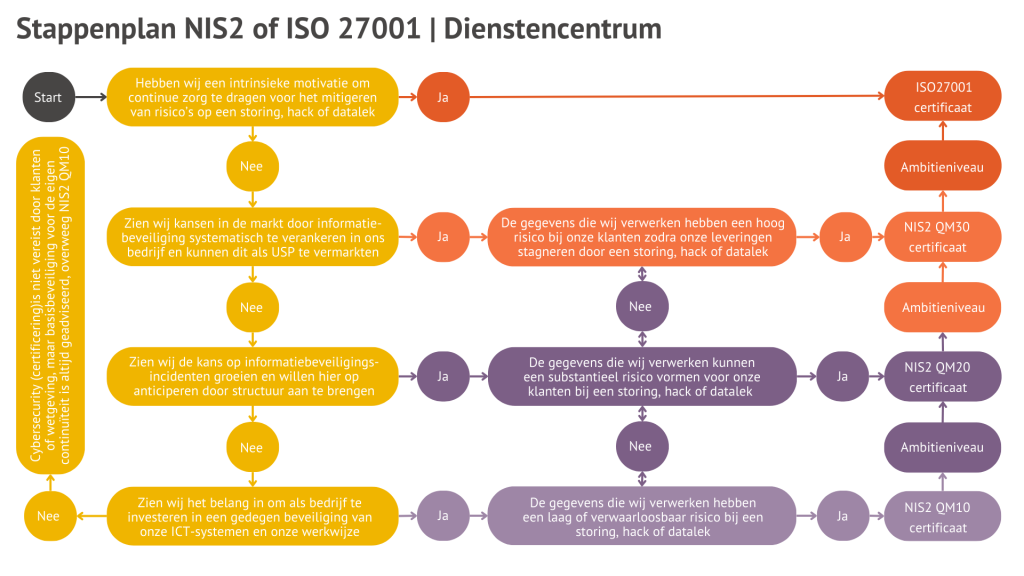
Speciaal voor het MKB hebben branche organisaties, MKB-Nederland en VNO-NCW een platform en een groeimodel ontwikkeld om bedrijven te kunnen certificeren voor 3 verschillende NIS2 niveaus. Op deze manier kunnen MKB-bedrijven op het gewenste cybersecurity niveau instappen, dit laten toetsen én klanten en leveranciers laten zien dat maatregelen zijn genomen.
Het Dienstencentrum volgt dit initiatief en heeft haar dienstverlening hier op aangepast om bedrijven op het eigen gewenste niveau te kunnen ondersteunen. Binnen de branche is ook de SCGM aangesloten om de audits uit te voeren door de vertrouwde SCGM auditoren die de branche kennen.
Om het gewenste NIS2 te bepalen hebben wij een stappenplan ontwikkeld. Doorloop het stappenplan, maak een inschatting van de risico’s en kom uit bij het gewenste NIS2 niveau.
Green Claims Directive
De Green Claims Directive is een EU-voorstel om de regels aan te scherpen voor milieu- (of “green”) claims door bedrijven in productinformatie, reclame etc. Het doel is om greenwashing tegen te gaan, zoals misleidende of vage beweringen over duurzaamheid, milieuvriendelijkheid, CO₂-neutraliteit etc. Het gaat hierbij vooralsnog om een Directive wat formeel een voorloper is van concrete wetgeving. In 2023 heeft de Europese Commissie een voorstel ingediend om medio 2026 deze geformaliseerd te hebben in wetgeving. Bedrijven kunnen nu al rekening houden met de vermelding van duurzaamheidsclaims om hier op voor te bereiden. Hieronder vind je een kort een overzicht van de belangrijkste aspecten:
- Beperking op algemene, vage claims
Termen zoals “eco”, “green”, “sustainable”, “klimaatneutraal” etc. kunnen niet meer zomaar gebruikt worden zonder specifieke bewijsvoering. Claims moeten duidelijk, specifiek en volledig onderbouwd zijn. - Verplichting tot bewijsvoering
Wetenschappelijk bewijs moet beschikbaar zijn, methodes als levenscyclusanalyses (LCA) zullen vaak nodig zijn. Claims moeten niet selectief metingen gebruiken of alleen de positieve kant belichten zonder negatieve effecten te benoemen. - Verificatie vooraf
Claims moeten geverifieerd worden door een onafhankelijke/machtiging geaccrediteerde instantie voordat ze gebruikt kunnen worden. - Transparantie en verantwoording
Duidelijk welk onderdeel van een product of bedrijf de claim betreft, wat de referentie is, wat de methode is en periodieke herziening van claim kan vereist worden.
Binnen de branche worden hier al de nodige voorbereidingen getroffen en zal ClimateCalc bij een eerstvolgende update aanpassingen in het ClimateCalc logo doorvoeren. Ook de Carbon Print-Score® is een belangrijke ontwikkeling om een claim daadwerkelijk te voorzien van de juiste informatie, bewijsvoering, verificatie en verantwoording van de methode.
Wil jij hulp of ondersteuning bij het voldoen aan deze wet en regelgeving?
Wil je nu zelf aan de slag, maar weet je niet waar te beginnen? of wil je dat een expert meekijkt zodat je zeker weet dat je het juiste aan het doen bent? Bij het Dienstencentrum helpen we je graag op weg. Heb je vragen over hoe we jouw kunnen helpen in het voldoen aan deze wetgeving en nieuwe eisen, vul dan het formulier in en we nemen vrijblijvend contact met je op.
Wil jij voldoen aan deze nieuwe wetgeving en eisen?
Geef mij voor meer informatie.